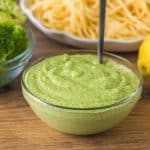
Easy Broccoli Pesto Recipe – Ready in 15 Minutes!
This easy broccoli pesto doubles as a broccoli pesto pasta sauce! Bright, cheesy, and ready in 15 minutes. Get the recipe now!
Servings 6
Ingredients
Broccoli Pesto Sauce
- 2 cups broccoli florets
- 2 garlic cloves minced
- ½ tsp salt
- ½ tsp ground black pepper
- ⅓ cup fresh grated Parmigiano cheese
- 2 tbsp pine nuts
- 1 cup fresh basil leaves
- 1 tbsp fresh lemon juice
- 1 tbsp lemon zest
- 7 tbsp olive oil
Broccoli Pesto Pasta Sauce
- 12 oz dry pasta Best pasta shapes: Penne, Fusilli, Rotini, Spaghetti, Linguine
Instructions
Broccoli Pesto Sauce
- Fill a medium saucepan ¾ full with water and bring it to a boil. Season the water with salt, then add the broccoli florets. Cook for 4 to 5 minutes, until the broccoli is tender.
- Drain the broccoli well. Let it cool for a few minutes so excess steam can escape. This helps prevent a watery pesto.
- Transfer the broccoli to a food processor. Pulse 4 to 5 times until the broccoli is finely chopped.
- Add the garlic, salt, black pepper, and grated Parmigiano cheese. Pulse a few times to combine.
- Add the pine nuts and basil leaves. Pulse several times until everything is evenly chopped.
- Add the lemon juice and lemon zest.
- With the food processor running on low, slowly drizzle in the olive oil until the pesto reaches your desired consistency. Scrape down the sides of the bowl as needed.
Broccoli Pesto Pasta
- Cook the pasta until al dente according to the package directions. Before draining, reserve ½ to ¾ cup of pasta water. Drain the pasta but do not rinse.
- Return the pasta to the pot or a large serving bowl. Stir in the broccoli pesto a few spoonfuls at a time. Add a splash of reserved pasta water as needed, until the sauce becomes silky and coats the pasta evenly.
- Finish with extra grated Parmigiano Reggiano, freshly cracked black pepper, and a squeeze of fresh lemon juice or zest if desired.
Notes
Pesto Notes:
- Broccoli florets
Cut the florets into similar-sized pieces so they cook evenly.
Avoid overcooking the broccoli. It should be tender but still bright green. Overcooked broccoli can make the pesto dull in color and flavor.
Drain thoroughly after boiling. Too much water will thin the pesto. - Garlic
Fresh garlic provides the best flavor
If using garlic powder instead, substitute 1 to 2 teaspoons and blend well - Parmigiano Reggiano
Freshly grated cheese melts into the pesto much better than pre-shredded cheese.
Finely grated cheese creates a smoother pesto, while coarsely grated cheese gives it a little more texture. - Pine nuts
For extra flavor, lightly toast the pine nuts in a dry skillet for 2 - 3 minutes before adding them to the food processor. Let them cool first.
Walnuts and almonds can be substituted if needed. - Basil
Pack the basil lightly when measuring.
Fresh basil gives the pesto its classic flavor. Avoid wilted or bruised leaves. - Lemon
Use fresh lemon juice and zest whenever possible.
The lemon brightens the broccoli and balances the richness of the cheese and olive oil. - Olive oil
Use a good quality extra virgin olive oil for the best flavor.
Add the oil gradually. You may need slightly more or less depending on how thick you like your pesto.
Storage
Store in an airtight container in the refrigerator for up to 4 days.Stir well before serving. Pesto freezes well in freezer proof containers.
Serving ideas
Toss with hot pasta, spread on sandwiches or wraps, spoon over grilled chicken or steak, use as a pizza sauce, or spread on crostini or crackers.Notes for pesto pasta
Nutritional information doesn't include the pasta version.- Best pasta shapes: Penne, Fusilli, Rotini, Spaghetti, Linguine.
- How much pasta to use: This recipe makes enough pesto for approximately 12 ounces of dry pasta.
- Protein ideas to serve with broccoli pesto pasta
- Grilled chicken, shrimp, Italian sausage, salmon, rotisserie chicken
- Vegetable add-ins
- Cherry tomatoes, spinach, peas, asparagus, sautéed mushrooms, onions.
Tips for the best pesto pasta
- Avoid heating the pesto over high heat, which can dull the fresh basil flavor.
- Toss the pesto with hot pasta rather than cooking it in a skillet.
Nutrition
Calories: 203kcal | Carbohydrates: 4g | Protein: 4g | Fat: 20g | Saturated Fat: 3g | Polyunsaturated Fat: 3g | Monounsaturated Fat: 13g | Cholesterol: 4mg | Sodium: 294mg | Potassium: 143mg | Fiber: 1g | Sugar: 1g | Vitamin A: 446IU | Vitamin C: 30mg | Calcium: 92mg | Iron: 1mg
Tried this recipe? That's awesome!Mention @hostessatheart or tag #hostessatheart!
