
Easy Homemade Flatbread Recipe (with Yeast)
This post may contain affiliate links. Please read our Disclosure Policy.
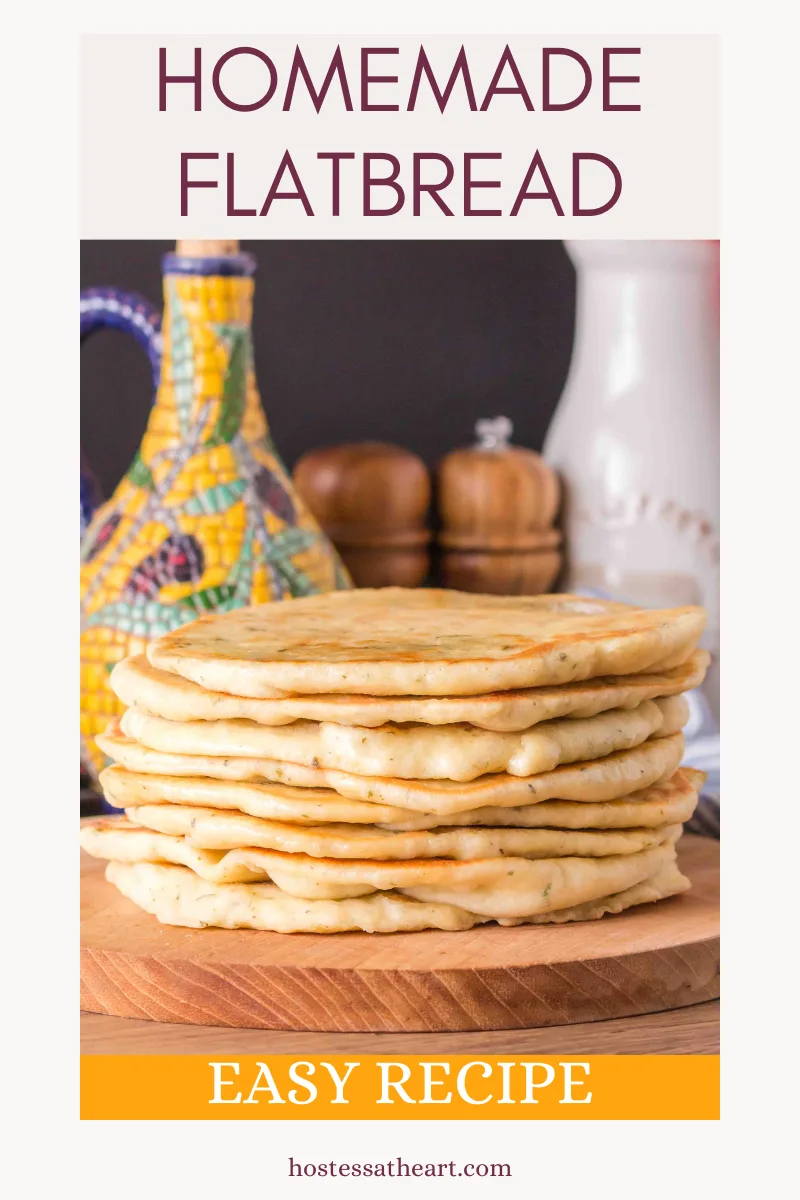
Whether you call it flatbread, flat bread, or yeast flatbread — this homemade version is about to become your new favorite thing to make. It’s soft in the middle, lightly crispy on the outside, and full of garlicky, herby flavor that store-bought just can’t touch. Best of all, you only need basic pantry ingredients and about 90 minutes from start to finish.

If you find bread-making intimidating, don’t worry. Our easy flatbread recipe is an entry-level recipe perfect for beginners and seasoned bakers alike. The resulting bread is both crispy and soft, chewy and tender. The flavor from olive oil and seasoning is incredible and when you realize how very little time it takes you’ll be making your own flatbread regularly.
We walk you through the whole process step-by-step and even share pictures to show you what each stage looks like. And with this recipe, chances are good you already have everything you need.
Why You Should Make This Easy Recipe
Oh my goodness, you have not lived until you have eaten warm fresh flatbread, straight out of the pan. We have a restaurant nearby that makes divine flatbread and brings copious amounts to your table to enjoy with fresh hummus. Eating there is when I realized it’s worth learning how to make your own at home. As breadmaking goes, this recipe is fast and easy. You only need one hour and fifteen minutes of rise time and you don’t really need any special skills.
What is Flatbread?
Any bread that is less than a few centimeters in thickness is considered a flatbread. This includes pita bread, pizza dough, tortillas, and any other bread that is rolled out to be thin. Unleavened flat breads don’t add yeast. This delicious flatbread is a yeast flatbread rolled thin.
Flatbread Ingredients

- Warm Water. It should be between 95-105ºF so that it encourages yeast reproduction without killing the yeast.
- Sugar – We use white granulated sugar to feed the yeast.
- Active Dry Yeast. If the different varieties of yeast confuse you, check out my Baking Techniques. Make sure you use the right type.
- Extra Virgin Olive Oil. Both the fat content and the flavor are important, and other types of oils are not as rich in flavor.
- Sour Cream – We recommend full-fat because it makes a soft fluffy flatbread. You can substitute it with plain yogurt.
- All-Purpose Flour – You can use bleached or unbleached flour. One doesn’t act or taste any differently from the other. Unbleached flour is just less processed since it doesn’t go through the step of bleaching it.
- Salt – You can use any salt. Our preferences are Kosher salt or Fine sea salt, which we feel dissolves better with a less likely chance of salt pockets in our baked goods.
- Parsley – Contributes a hint of earthiness and a touch of brightness that balances the richness of the dough and any toppings you might add.
- Instead of or in addition to parsley, the best fresh herbs to put in homemade flatbread are thyme, rosemary, and or dill.
- Garlic Powder – Infuses the dough with a subtle yet distinctive garlic taste that enhances the overall flavor profile. It also pairs well with other herbs and seasonings, making your flatbread more aromatic and flavorful. We do not recommend fresh garlic.
- Italian Seasonings – Dried herb blend.
Easy Flatbread Ingredient Substitutions
This flat bread recipe is pretty forgiving! Here’s what you can swap if you’re missing something:
- Sour cream: Plain full-fat yogurt works great 1:1. It keeps the dough soft and tender. Greek yogurt also works but may make the dough slightly denser.
- Active dry yeast: Instant yeast works fine — you can skip the proofing step and mix it straight in with the dry ingredients. Use the same amount.
- All-purpose flour: You can use bread flour for a slightly chewier texture. Whole wheat flour can replace up to half the all-purpose flour, but the flatbread will be a bit denser and nuttier.
- Extra virgin olive oil: Avocado oil or any neutral vegetable oil will work in a pinch, but you’ll lose some of that rich, savory flavor olive oil brings.
- Italian seasoning: No Italian seasoning? Use a mix of dried oregano, basil, and thyme. Or leave it out and keep the flatbread plain — it’s a great base for toppings!
- Parsley: Fresh or dried thyme, rosemary, or dill all work beautifully. You can also skip the herbs entirely for a more neutral flatbread.
- Garlic powder: Fresh minced garlic can be used, but the texture may be uneven and it can burn in the skillet. Garlic powder blends better into the dough.
How To Make Our Easy Flatbread Recipe
Please note, that the printable recipe card has the full list of ingredients, quantities, complete instructions, and nutritional information. The following is a quick overview of the recipe.
Proof the yeast for our easy flatbread recipe.
In a large mixing bowl, add the water, sugar, and yeast. Mix slightly and let it rest for 4 to 6 minutes until the mixture becomes foamy.

Add remaining wet Ingredients.
Once the mixture is foamy, add the olive oil and sour cream.

Add the flour and seasoning.
Add half of the flour and mix until the flour is almost incorporated, and you still have dry flour visible. Then, add salt, parsley, garlic powder, and Italian seasonings to the mixture. Add the remaining flour and mix until all combined.

Knead your Homemade Flatbread Dough.
Knead the yeast dough mixture on a lightly floured surface until the dough forms a ball. Place the ball of dough in a large bowl prepared with a little olive oil and cover it with plastic wrap. Set it aside to rise.

Roll out the dough.
On a floured surface, divide the dough into 10 equal pieces, rolling them into smooth balls. Cover the dough with a clean dish towel and let the dough rise a second time.

Preheat a pan.
Your target temperature is 375-400ºF. A skillet, griddle pan, or flattop grill will work easily. A Cast iron skillet is our favorite way to cook flat bread because it maintains the heat without cooling between batches.
Roll out the dough balls and cook.
Use a rolling pin to roll the dough into 8-inch circles. Brush a little olive oil on one side of the dough disc and place the oiled side on the preheated skillet, cooking for two minutes before flipping to the second side. Flip and cook for a couple more minutes. Cool.

Hostess Tips
It’s just as quick to mix easy flatbreads by hand. We mixed all the ingredients into a bowl and used a Danish dough whisk. You can easily make it in a stand-up mixer fitted with the dough hook attachment, but I wouldn’t recommend a hand mixer or a regular whisk. The dough will be thick and sticky.
When you roll a piece of dough into a circle, roll it from the center to the outside turning it as you go. Don’t stress if you can’t roll perfect circles. Some of mine resemble rough ovals. They’re just as delicious.
Brush a little olive oil on the flatbread before cooking to help it brown more evenly.
Cook the flatbread in batches. Don’t crowd them.
What to Eat with Flatbread
You can have so much fun changing up how you enjoy this yummy flatbread.
Spread garlic butter and add shredded cheese for impromptu garlic bread. Make an olive oil and vinegar dip to serve with cheese and salami. Use our recipes for gorgeous pickled beet hummus or sweet basil pesto as dips.
Want to save this recipe?
I'd like to receive more tips and recipes from Hostess At Heart!
Use the flatbread as the base for Chicken Gyro sandwiches or as a side with any Mediterranean meal just like we did or our Greek Salad with Lemon Vinaigrette. It also just so happens to be the perfect bread to use with a panini press. Homemade tatziki or yogurt dill dressing is beautiful with this bread.

Common Flatbread Mistakes (and How to Fix Them)
Even easy recipes have a few sneaky spots where things can go sideways. Here’s what to watch for:
Your yeast didn’t foam. This is the most common problem — and the fix is simple. Your water was either too hot (above 110°F kills yeast) or too cold (below 95°F won’t wake it up). Use a kitchen thermometer if you have one. If the mixture isn’t foamy after 6 minutes, start over with fresh yeast. Don’t skip this step — if the yeast is dead, the dough won’t rise.
The dough is too sticky to work with. Totally normal! This dough is meant to be a little sticky. Lightly flour your hands and your surface, but resist the urge to add a lot of extra flour — too much will make your flatbread tough and dense instead of soft and tender.
The flatbread is burning on the outside but doughy inside. Your pan is too hot. Aim for medium to medium-high heat, around 375–400°F. Cast iron holds heat so well that it can creep up between batches — if you notice the bread browning too fast, turn the heat down a notch and give the pan a minute to settle.
The flatbread isn’t puffing up. A few possible causes: the dough balls didn’t rest long enough before rolling (give them the full 15 minutes), the pan wasn’t hot enough when the dough went in, or the flatbread was rolled too thin. Aim for about ¼ inch thick — thin enough to cook through quickly, thick enough to get those gorgeous bubbles.
The flatbread is stiff or cracker-like after cooling. Usually means it cooked a bit too long, or it wasn’t covered while it cooled. Stack your finished flatbreads and loosely tent them with a clean kitchen towel while the rest are cooking — the steam keeps them soft and pliable.
You can’t get even circles. Don’t stress it. Roll from the center outward, rotating the dough as you go. Imperfect ovals taste exactly the same as perfect circles, and honestly they look more homemade-beautiful on a board.
Have a tip of your own? Drop it in the comments below — and if you tried this recipe, a ⭐ rating helps others find it!
Frequently Asked Questions
Is flatbread gluten-free?
No. Most flatbreads contain wheat, which has gluten by definition. Many gluten-sensitive people use gluten-free flour at a ratio of 1:1 however, I’ve not tried it.
How do I know when Flatbread is finished cooking in a skillet?
Knowing when flatbread is finished cooking in a skillet involves looking for these key signs:
- Golden Brown Spots: The flatbread should have golden brown spots on both sides. This indicates that it has cooked evenly and is ready.
- Puffed Up: The flatbread will often puff up in spots as it cooks, which is a good sign that the dough is cooked through.
- Firm and Slightly Crisp Edges: The edges should be firm and slightly crisp, not doughy or soft.
- Cook Time: Depending on the thickness and heat, each side should take about 1-3 minutes to cook. Adjust the heat if it’s browning too quickly or taking too long.
For the best results, keep an eye on the flatbread as it cooks, flipping it when the underside is golden brown and adjusting the heat to avoid burning.
Can I make this flatbread without yeast?
Yes! If you need a no-yeast version, you can swap the yeast for 1 teaspoon of baking powder and skip the rise time entirely. The texture won’t be quite as chewy and pillowy, but you’ll still get a delicious flat bread that’s ready in minutes. Our yeast version is worth the extra time if you have it though — the flavor is so much better!
What is the difference between flatbread and pita bread?
Both are thin, yeasted breads — but there are a few key differences. Pita bread is baked in a very hot oven, which causes it to puff up and form a pocket inside. Flatbread is cooked in a skillet or on a griddle, giving it a softer, more flexible texture without the pocket. Both are delicious! Check out our Homemade Pita Bread recipe if you want to try both and compare.
Can I make flatbread dough ahead of time?
Yes! After the first rise, you can refrigerate the dough balls for up to 24 hours. Just cover them well and let them come back to room temperature for about 20 minutes before rolling and cooking. This makes it easy to prep the dough the night before for a quick flatbread dinner.
Why is my flatbread not puffing up?
A few things can cause this: your pan might not be hot enough (aim for 375–400°F), the dough balls may need a little more rest time before rolling, or the dough might have been rolled too thin. Also make sure your yeast is fresh — if it didn’t foam during proofing, it may be expired.
Can I use a cast iron pan vs. a regular skillet?
Cast iron is our top pick because it holds heat so evenly between batches — your 5th piece cooks just as well as your 1st. A regular non-stick skillet works fine too, just watch that it doesn’t lose heat when you add cold dough. A flat griddle is also a great option if you want to cook two at once.
How long does homemade flatbread last?
Store cooled flatbread in an airtight bag or container at room temperature for up to 4 days. For longer storage, freeze individual pieces for up to 3 months. Reheat in a hot skillet, the air fryer at 300°F, or a toaster — it comes back beautifully!

How To Reheat & Store Homemade Flatbread
Best way to store Flatbread with yeast
Once completely cooled, place in an airtight container or bag for up to 4 days at room temperature. This makes cooked flatbread a great make-ahead recipe. We don’t recommend refrigerating the bread might help it last longer, but it can also make the bread soggy.
Can I freeze Homemade Flatbread?
Yes. Freeze individual pieces on a baking sheet pan, and then combine them in a freezer-quality plastic bag.
How to reheat this Easy Flatbread Recipe
Warm up in the air fryer at 300º F for 3 to 4 minutes or in a hot skillet. Frozen pieces can be thawed and reheated in a toaster or toaster oven.

If you enjoyed Homemade Flatbread, I think you’ll enjoy this too!
Homemade bread is one of my favorite things in life. I think you will love our homemade flatbread pizza recipe as much as I do so be sure to check it out!
I hope you enjoyed this delicious recipe as much as we do. Drop me a comment below, and don’t forget to give it a star rating. ⭐⭐⭐⭐⭐. Your comments and ratings help others decide if this recipe is for them too.

Easy Flatbread Recipe (with yeast)
Ingredients
- 1 ¼ cup lukewarm water 95-105 degrees F
- 1 tbsp sugar
- 2 ½ tsp active dry yeast 1 envelop
- ½ cup + 2 tablespoons olive oil
- ½ cup sour cream
- 4 cups unbleached all-purpose flour
- 2 tsp salt
- 1 tsp parsley
- 1 tsp garlic powder
- 1 tsp Italian seasoning
Instructions
- In a large mixing bowl, add the water, sugar, and yeast. Mix slightly and let it rest for 4 to 6 minutes until the mixture becomes foamy.
- Once the mixture is foamy, add the olive oil (½ cup) and sour cream. Mix well.
- Add half of the flour and mix until the flour is almost incorporated, and you still have dry flour visible.
- Add in salt, parsley, garlic powder, and Italian seasoning to the mixture. Mix well.
- Add the remaining flour and mix until all combined. The dough will be thick and sticky. I used a Danish Dough whisk, I would recommend a mixing spoon or the Danish whisk, not a hand mixer.
- Knead the mixture on a lightly floured surface until the dough forms a ball.
- Transfer the dough to an oil bowl.
- Cover the bowl with a plastic wrap and allow the dough to rise for 1 hour.
- On a floured surface, divide the dough into 10 equal pieces.
- Roll each piece into a ball and put it aside.
- Once all pieces are rolled, cover with a towel and let the dough rest for 15 minutes.
- Preheat a pan (I love using a flat cast iron skillet or a griddle) to a temperature of 375 °F to 400 °F.
- While the skillet is warming up, roll the dough into a 7 8-inch circle.
- Brush oil on one side of the dough disc and place the oiled side on the preheated skillet.
- Cook for 2 minutes. The flatbread will start to be bubbly.
- Oil the other side of the flatbread before flipping it and cook for an additional 2 minutes.
- Place the cooked flatbread on a cooling rack.
- Repeat until all the flatbread is cooked.
Video
Notes
- Brushing oil on the flatbread before cooking helps browning evenly.
- Store at room temperature for up to 4 days. Flatbread can be frozen in an airtight freezer-safe container for up to 3 months.
Nutrition
Nutritional Disclaimer
This recipe was calculated using the exact brands and measurements I used to make this recipe. If you are following a strict diet please note changing anything will cause the nutritional info to change. My calculations are intended as a guide only.
Did you enjoy this recipe? Don’t forget to pin it for later and follow me on Pinterest for more delicious recipes like this one!
Originally published: July 9, 2024. Updated: June 4, 2026 – Enhanced with more detailed instructions, tips, and serving suggestions. No changes were made to the recipe.



This flatbread was fantastic! The whole family loved making pizzas on them tonight! We also pinched it off piece by piece and dipped it in olive oil…so good!!
I love dipping flatbread too. It’s delicious on a charcuterie board.
You are my bread queen! We loved this flatbread!
Thank you, Kathleen! I’ll take that moniker.