
Spelt Sourdough Bread – Nutty, Crusty, and Easy to Make at Home
This post may contain affiliate links. Please read our Disclosure Policy.

If you’ve been curious about baking with spelt flour, this is the recipe to start with. Spelt sourdough bread has a naturally nutty, slightly sweet flavor that’s different from your everyday sourdough — and honestly? It might become your new favorite loaf.
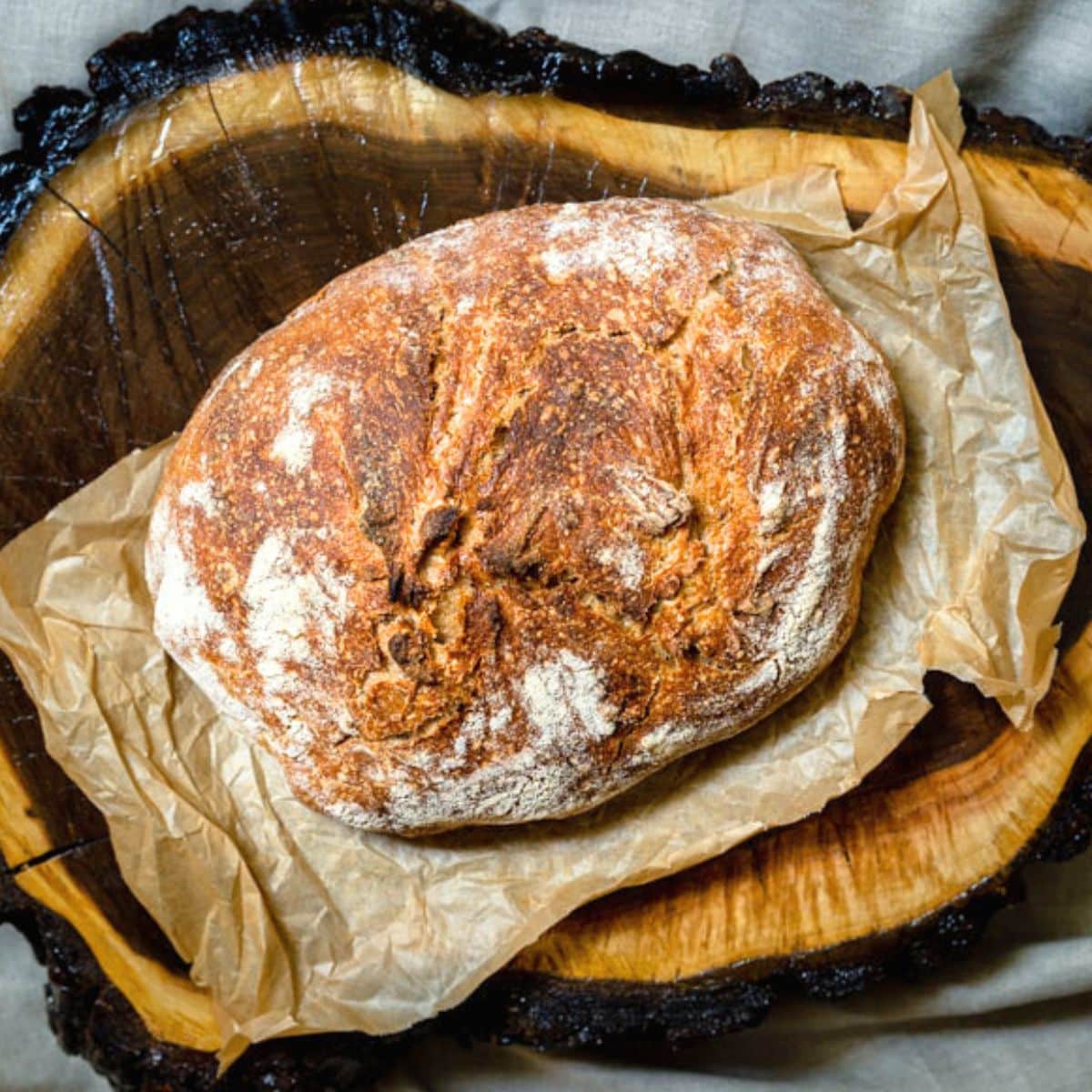
This recipe uses a mix of spelt flour and bread flour so you get all that amazing spelt flavor with a beautiful rise and a golden crusty exterior. Fresh rosemary adds a subtle herby flavor, but you can easily leave it out or swap it for another herb.
It’s an overnight recipe with minimal hands-on time. Mix it in the evening, let it do its thing, and bake a gorgeous loaf the next day.
✅ Great for spelt flour beginners
✅ No special skills needed
✅ Soft, open crumb with a crackly crust
✅ Easy to customize with different herbs
What Is Spelt Flour? (And Why Use It in Sourdough?)
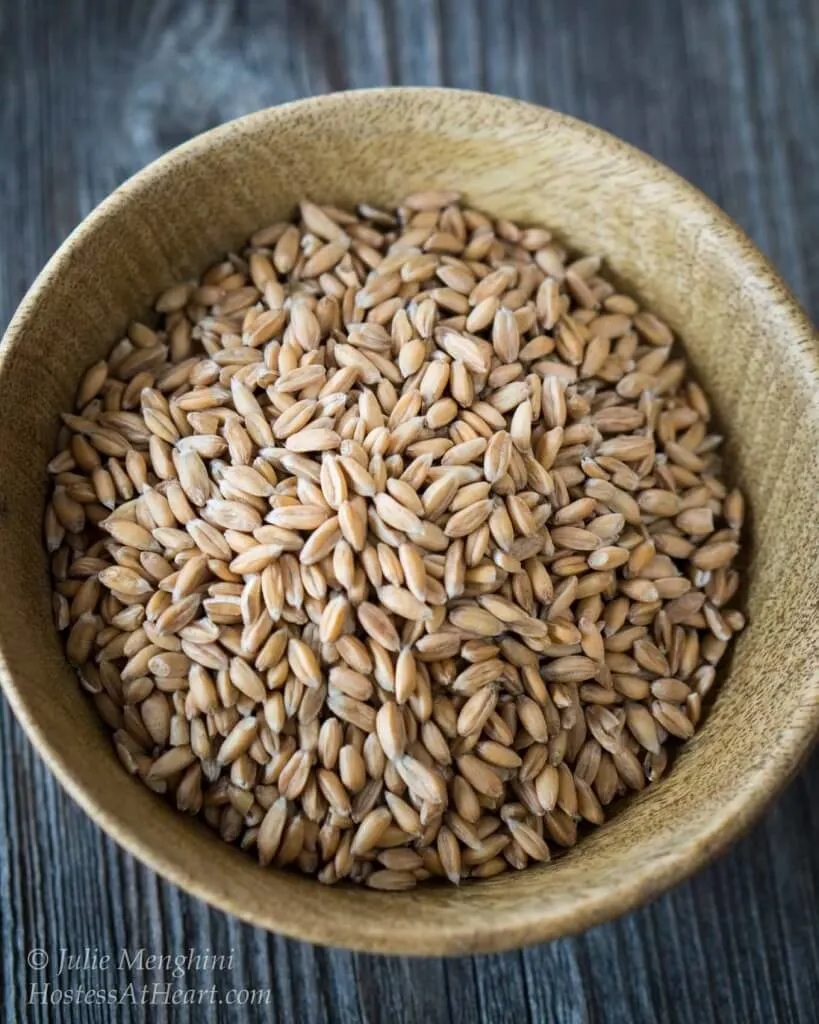
Spelt is an ancient whole grain in the wheat family, but it is not wheat!
Why Bakers Love Spelt Flour
I’ve read that spelt has less gluten than wheat, and some gluten-sensitive people can tolerate it. I would use caution here, however, because it does contain gluten. People with celiac disease shouldn’t consume spelt.
I bring up gluten in spelt because it is more fragile than in wheat flour. For this reason, it acts differently from wheat flour in baking.
I’ve found that spelt flour, on its own, will deflate or flatten once it’s removed from the oven in my quick bread recipes. I haven’t baked a 100% spelt flour loaf of bread.
For that reason, I combine spelt flour with other flours such as bread flour or white flour. Using a mix of flour still allows the spelt flavor to shine.
Spelt flour comes in several varieties. We used whole-grain, stone-ground flour in this recipe.
I found this resource helpful in tips for using spelt flour.
I used a different technique for rising this spelt bread recipe compared to our Overnight Sourdough Bread and Multi-grain Wheat Bread recipes. It still has minimal handling, but after a countertop rest like the other bread recipes, I put it in the refrigerator for a slow overnight fermentation.
I use this method with some of my other artisan breads and like the flavor it takes on.
How to Make Spelt Sourdough Bread Step by Step
I made adjustments to the flour mix and the water ratio. Spelt absorbed the water so this bread has is higher in what’s called “hydration” than some of our other sourdough bread recipes.
Hydration is the ratio of flour to water. For example, we use a total of 500 grams of flour in the recipe and 375 grams of water so the hydration is 75% (500/375).
Don’t get hung up on the math stuff since I’ve done it for you. As you can see in the first picture below, this is a wetter dough.
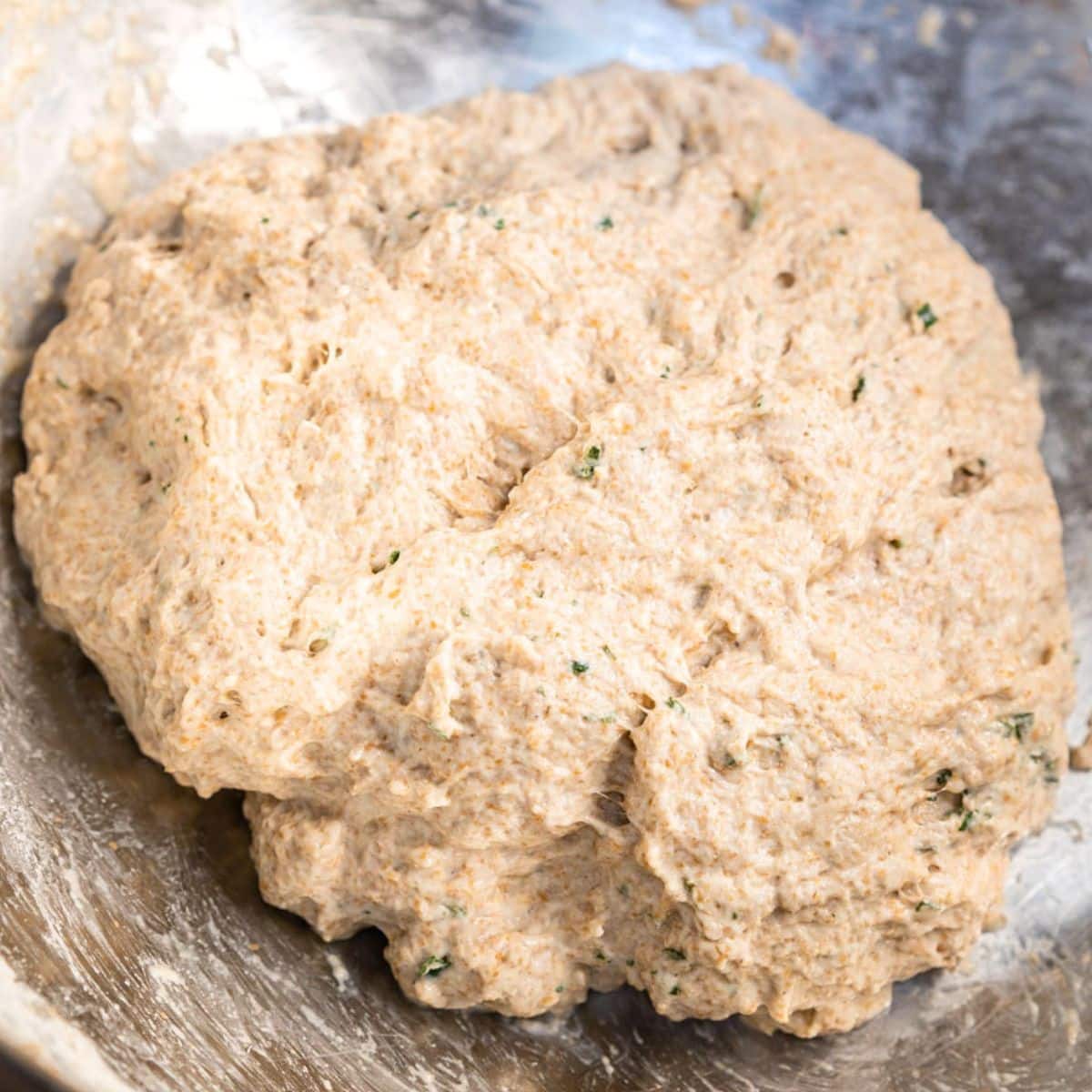
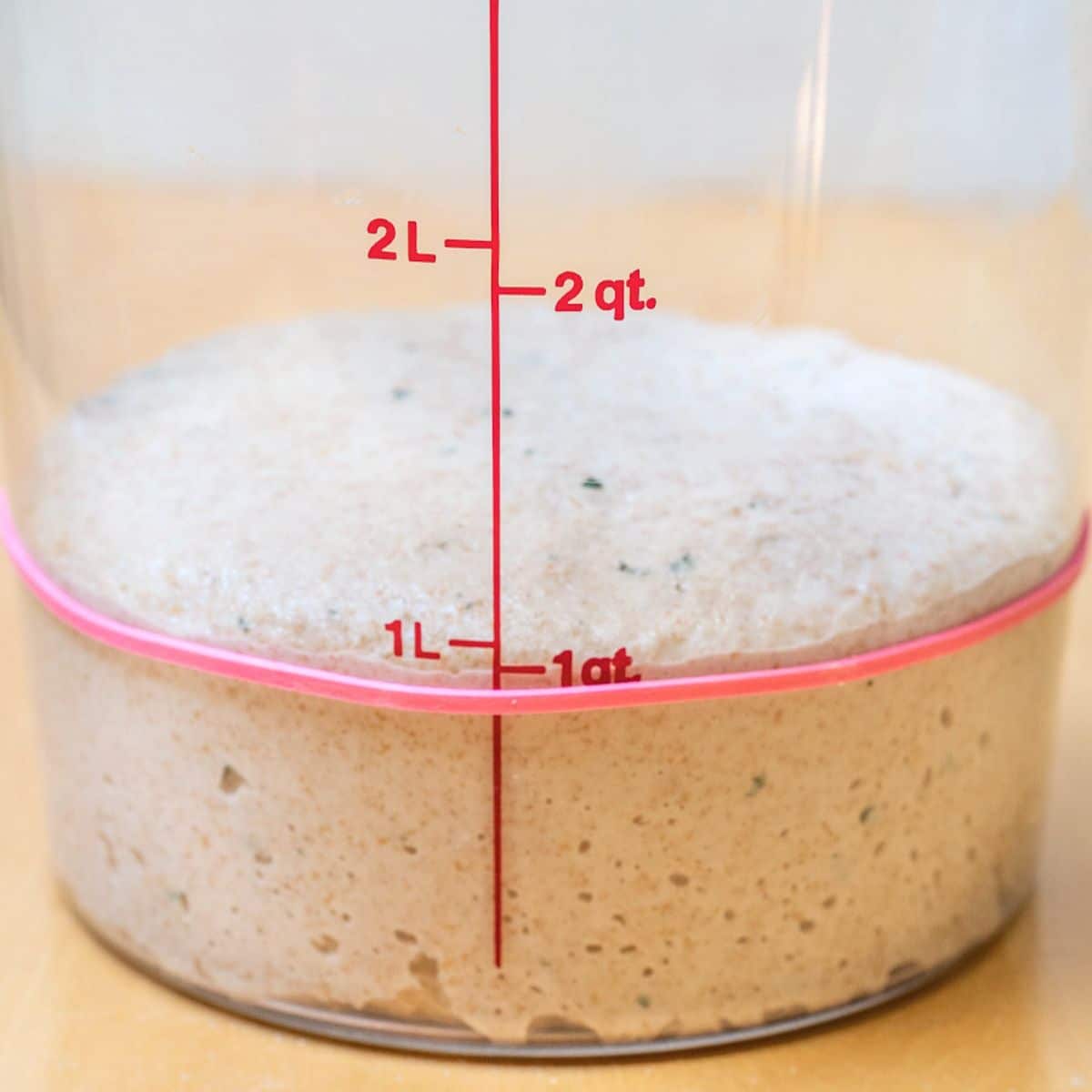
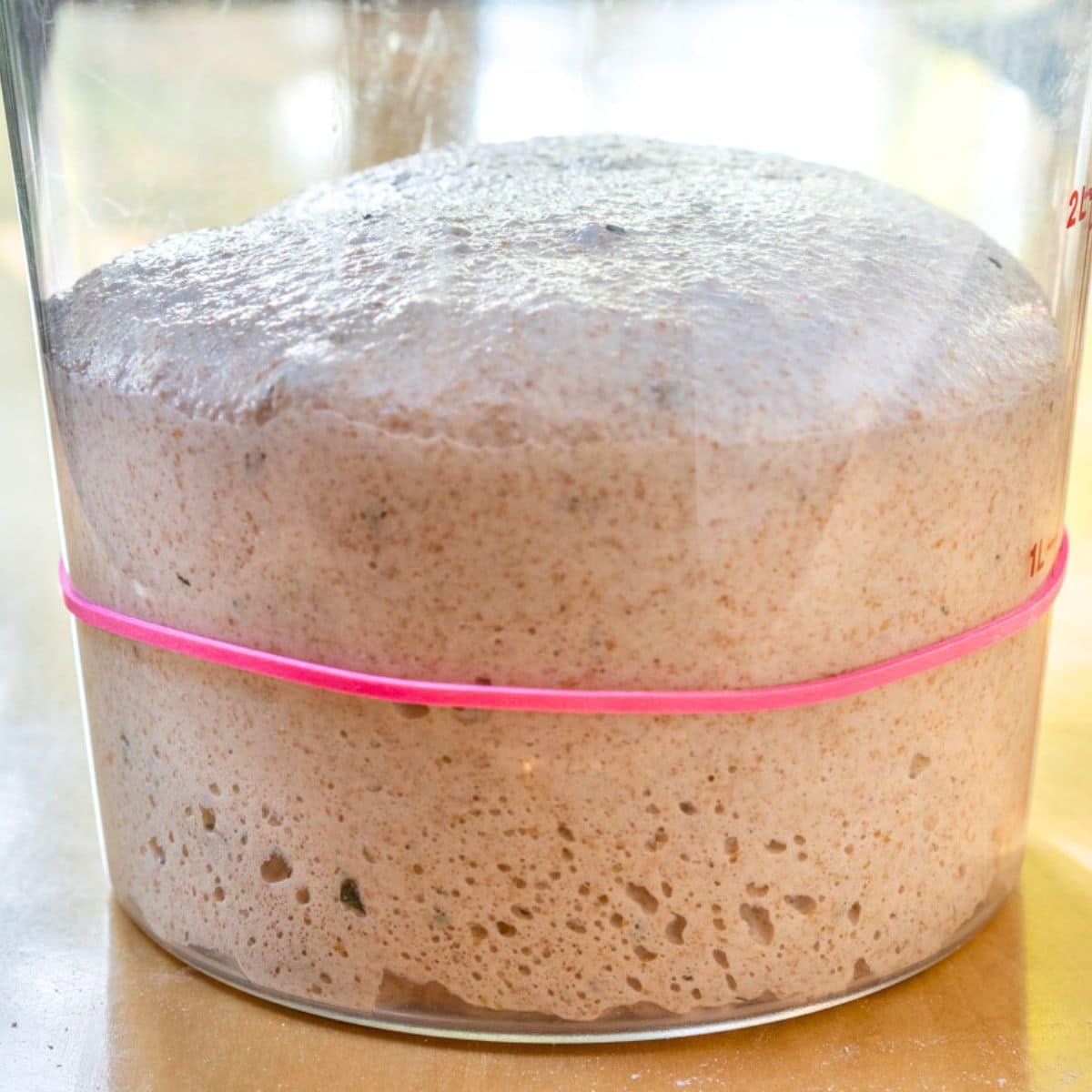
- Mix by squeezing it all of the ingredients together with your hands.
- Place the dough in a container that you can measure its progress in. I have several rising buckets in several sizes, but a bowl works just fine.
- When dough has doubled, remove it from the container and shape.
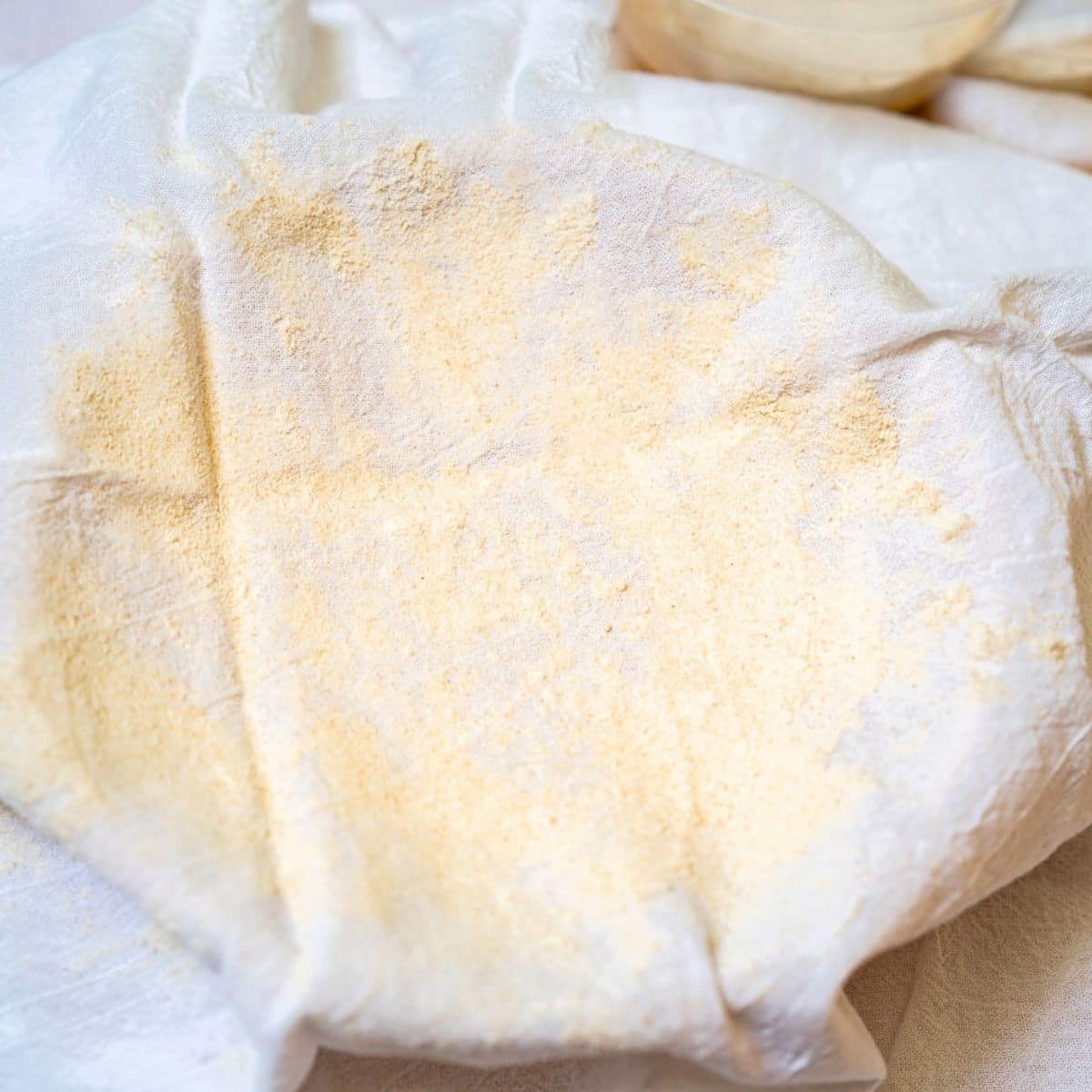
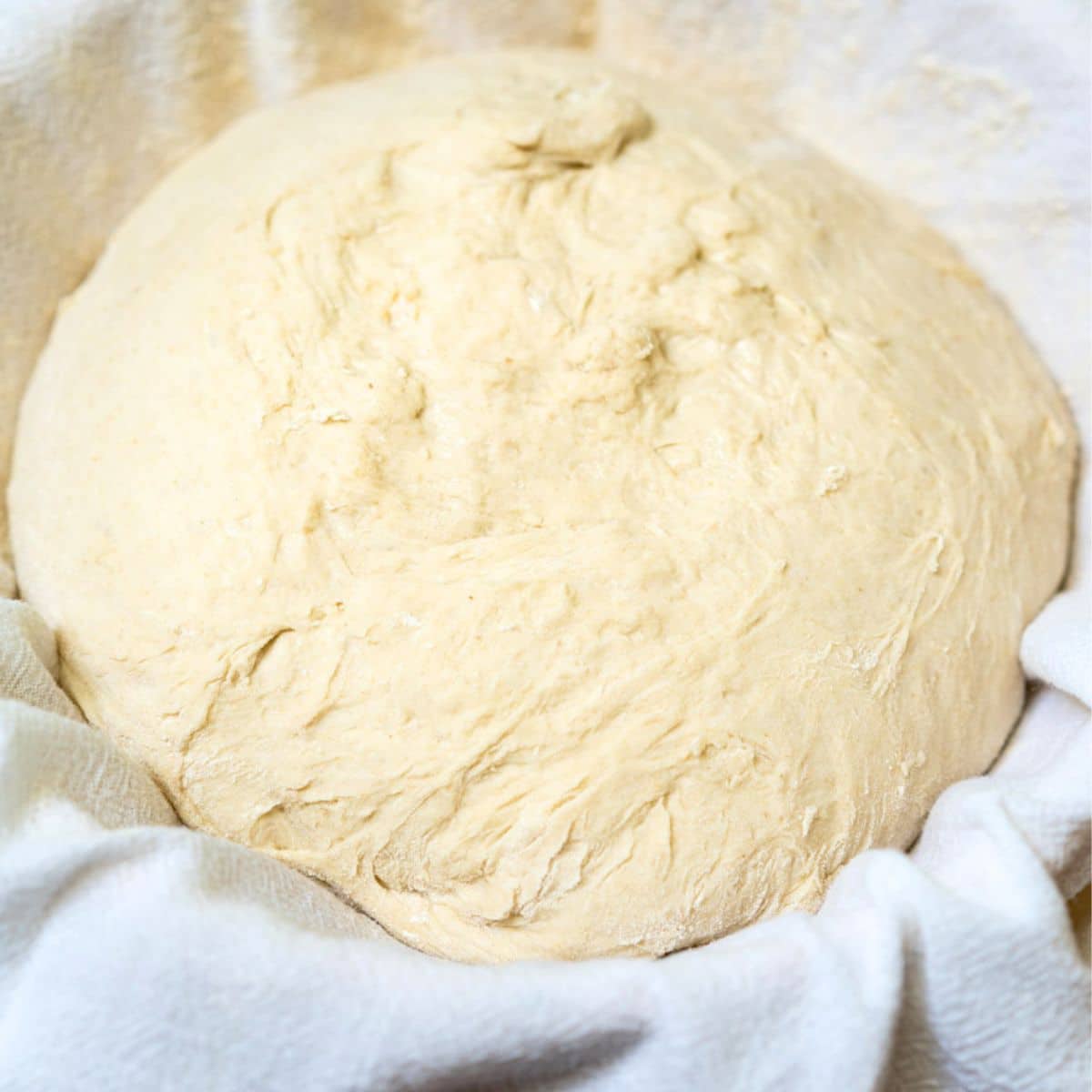
- Prepare a bowl or a basket (banneton) by dusting it with flour. I use a 50/50 mix of white whole wheat with rice flour. Use what you have.
- Place the shaped dough, seam side up in the prepared bowl or basket. Cover the dough and place it in the refrigerator for up to 12 hours. I’ll put the whole basket in a plastic grocery bag.
- Bake as instructed in the recipe card below.
If you would like to see how I get the dough into a hot pot without ruining the shape of the bread or burning myself, I’ve got a “how-to” video on my Wheat Bread post.
For a complete guide to sourdough baking from starter to loaf, check out our Complete Sourdough Baking Guide.
Don’t Have a Starter Yet? Make Your Own!
This bread uses a “starter“. You can build your own and have your very own sourdough bread on the table in less than 8 days. Our step-by-step guide takes out all of the mystery.
You could feed your starter with spelt flour instead of the wheat flour used in my starter recipe. However, I don’t think that it makes a difference and I don’t want to maintain several different starters according to the flour used in the bread I’m making.
How to Feed Your Sourdough Starter
Fed starter is also referred to as a “Levain”. Don’t get hung up on the terms. It’s just a fed starter.
Want to save this recipe?
I'd like to receive more tips and recipes from Hostess At Heart!
We feed our starter before bed by taking 1 tablespoon of starter and mixing it with 200gr filtered water and 200gr of our 50/50 flour mix. It has always passed the float test the next morning which can be 6 to 8 hours.
If you’re making your bread without letting your starter feed overnight, you just have to watch it. It’s ready when it’s increased by about 30% which is about 4 hours for mine. Room temperature and strength can be variables, however.
This makes more starter than what you will need but I bake several loaves at a time and freeze them.
Ingredients for Spelt Sourdough Bread
- Bubbly starter – We store our starter in the refrigerator between baking days so will feed it for a couple of days before using it to make sure it’s good and active before baking.
- After you feed your starter, wait until it’s increased in volume by about 30%. That’s usually about 4 hours for mine, but if we’re mixing in the morning, it can be 6 to 8 hours overnight.
- If your dough is runny, it can be because your starter was actually starving when you used it. I have a video showing how to check to see if your Levain is ready to use.
- Salt – I use fine sea salt. It is easier to incorporate and dissolve than a coarser salt.
- Spelt Flour – I used organic whole-grain, stone-ground spelt flour. It has an amazing texture and sweet nutty flavor.
- Organic Bread Flour – Bread flour has a higher protein content than AP flour. That higher protein provides more structure to your loaf. It worked very well with the wheat flour
- Water – There’s a lot of controversy regarding water in bread making. Some experts say if you can drink it you can bake with it. Other experts say the chlorine and mineral content can inhibit yeast activity.
- Fresh Rosemary – You can substitute for dry or choose another herb. Fresh Thyme would be delicious too. You can also leave them out altogether and it will not affect the final outcome one bit.
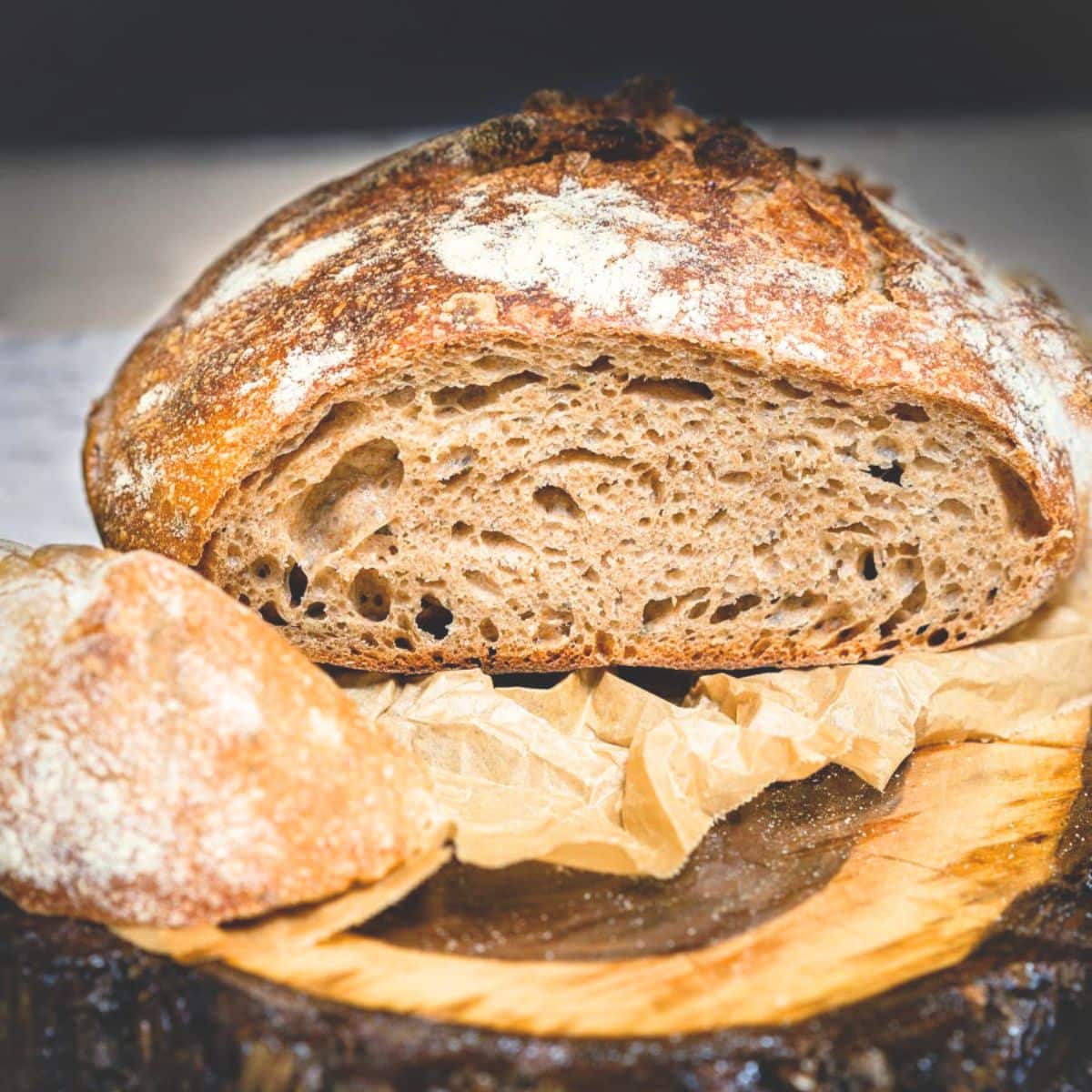
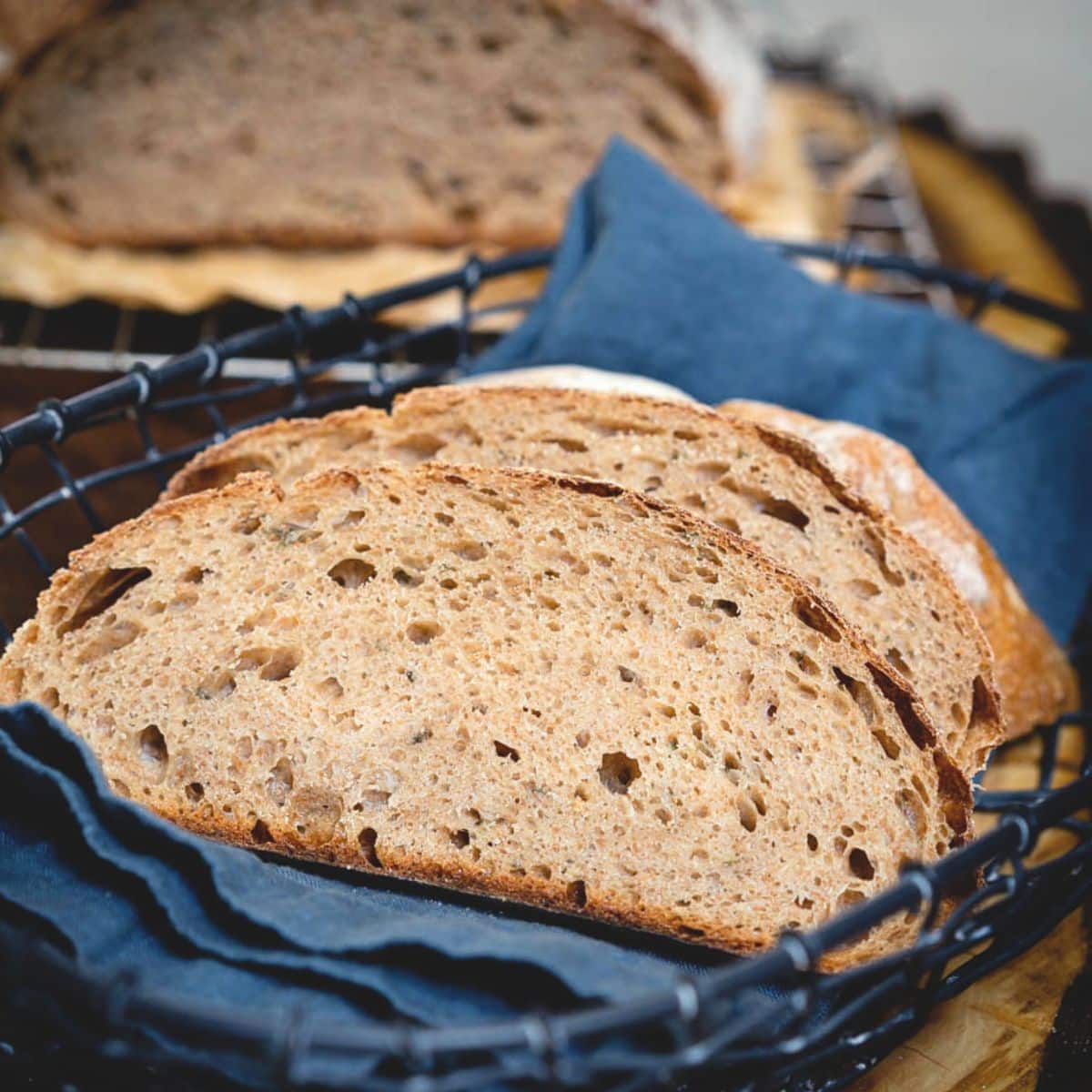
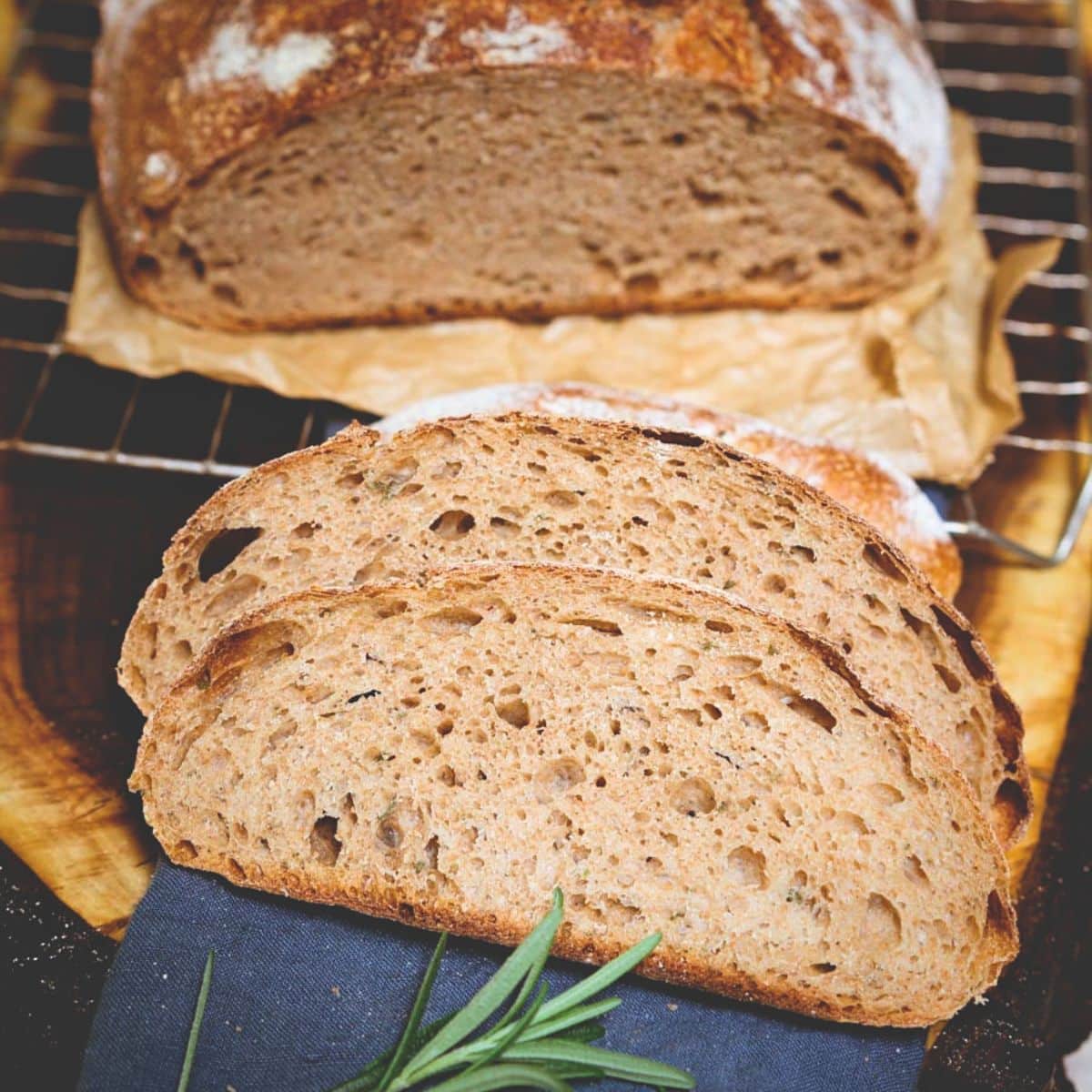
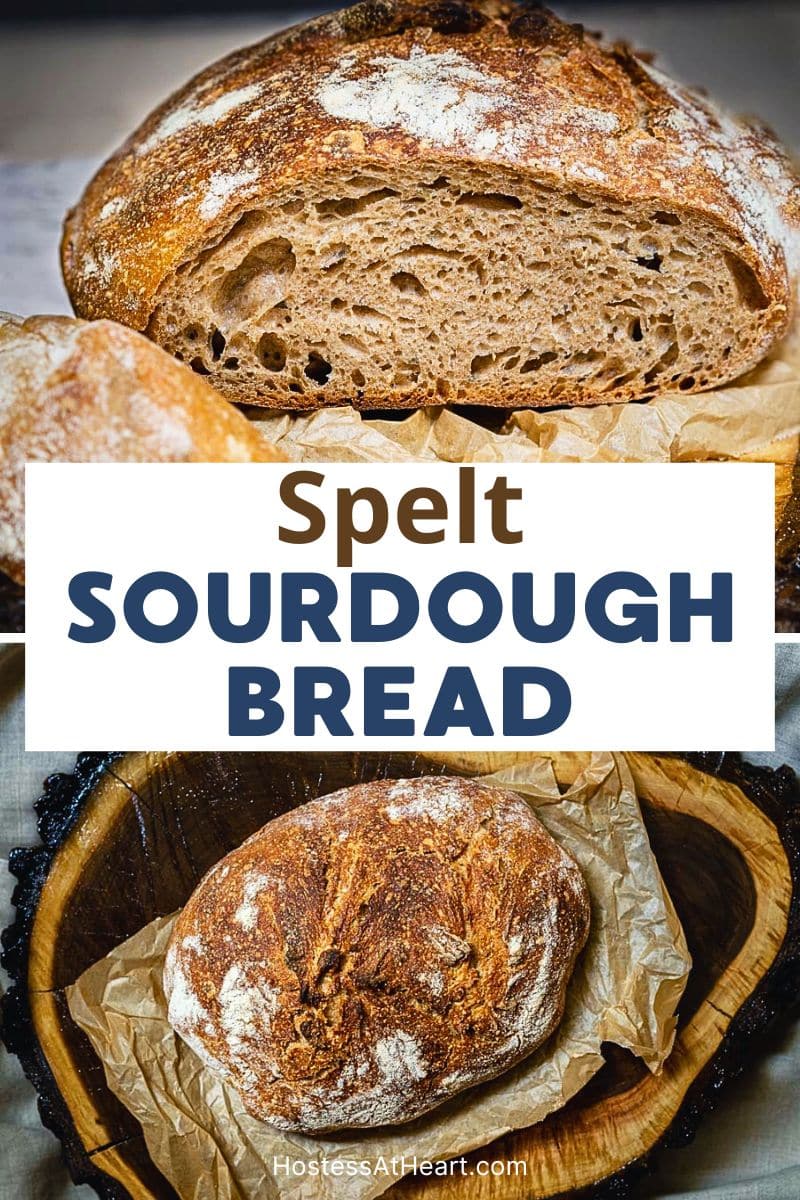
This Spelt Sourdough bread came out with that delicious crispy crust and that pull you want in a sourdough loaf. The center was soft and tender with that sweet nutty flavor from the spelt flour and essence from the fresh rosemary.
Herb and Flavor Variations for Spelt Sourdough
One of the best things about this recipe is how easy it is to change up the flavor. Here are some easy swaps for the rosemary:
- Thyme – A little lighter in flavor than rosemary. Pairs beautifully with soups and stews.
- Roasted garlic – Add 3–4 cloves of mashed roasted garlic to the dough. This makes an incredible sandwich bread!
- Caraway seeds – Give it a light rye-bread vibe with a tablespoon of caraway seeds mixed in.
- Kalamata olives – Roughly chop and fold in about 1/2 cup for a Mediterranean-style loaf.
- Plain (no herbs) – Leave out the rosemary entirely for a simple spelt sourdough that lets the grain flavor shine.
You can also sprinkle flaky sea salt or sesame seeds on top before baking for a little extra crunch.
Spelt Sourdough Bread — Frequently Asked Questions
Can I use 100% spelt flour for sourdough bread? You can, but it’s tricky! Spelt has more fragile gluten than regular wheat, so a 100% spelt loaf tends to flatten and spread rather than hold its shape. Mixing spelt with bread flour (as this recipe does) gives you the best of both worlds — that sweet nutty spelt flavor with a better structure and rise.
Does spelt sourdough taste different from regular sourdough? Yes! Spelt has a naturally nuttier, slightly sweeter flavor than wheat flour. The sourdough tang is still there, but it’s balanced by the warm, earthy taste of spelt. A lot of people who try it say they actually prefer it to plain sourdough.
Is spelt sourdough bread good for people with gluten sensitivity? Spelt does contain gluten, so it is NOT safe for people with celiac disease. However, some people with a mild gluten sensitivity find spelt easier to digest than regular wheat. That’s likely because spelt’s gluten is more water-soluble and may break down more during the long fermentation process. Always check with your doctor if you have a gluten-related condition.
Can I use whole grain spelt flour or light spelt flour in this recipe? This recipe was made with whole grain stone-ground spelt flour, which gives it a heartier flavor and texture. Light (sifted) spelt flour will produce a slightly milder flavor and softer crumb. Either will work — just don’t swap in sprouted spelt without adjusting your water ratio, as it absorbs liquid differently.
Can I skip the rosemary? Absolutely! The rosemary is optional. Leave it out for a plain spelt sourdough, or try fresh thyme, a tablespoon of caraway seeds, or even roasted garlic. The recipe will not be affected either way.
Why didn’t my spelt sourdough rise as tall as my regular sourdough? That’s totally normal and expected. Spelt’s gluten is more fragile, so the loaf won’t get as tall as a bread flour loaf. It’s still a beautiful loaf — just lower and wider, which is the nature of spelt. Make sure your starter is active and bubbly before you begin for the best rise.
Do I have to score spelt sourdough bread? Scoring (cutting the top of the loaf before baking) helps prevent “blowouts” in breads that have strong gluten structure. With spelt, the gluten is already more delicate, so skipping the score is fine. This recipe is made without scoring and comes out beautifully.
How do I store spelt sourdough bread? Let it cool completely, then wrap it in a clean kitchen towel or beeswax wrap and store at room temperature for 2–3 days. For longer storage, slice it first and freeze in a zip-lock bag or wrap tightly in plastic wrap and foil. It toasts up beautifully straight from the freezer!
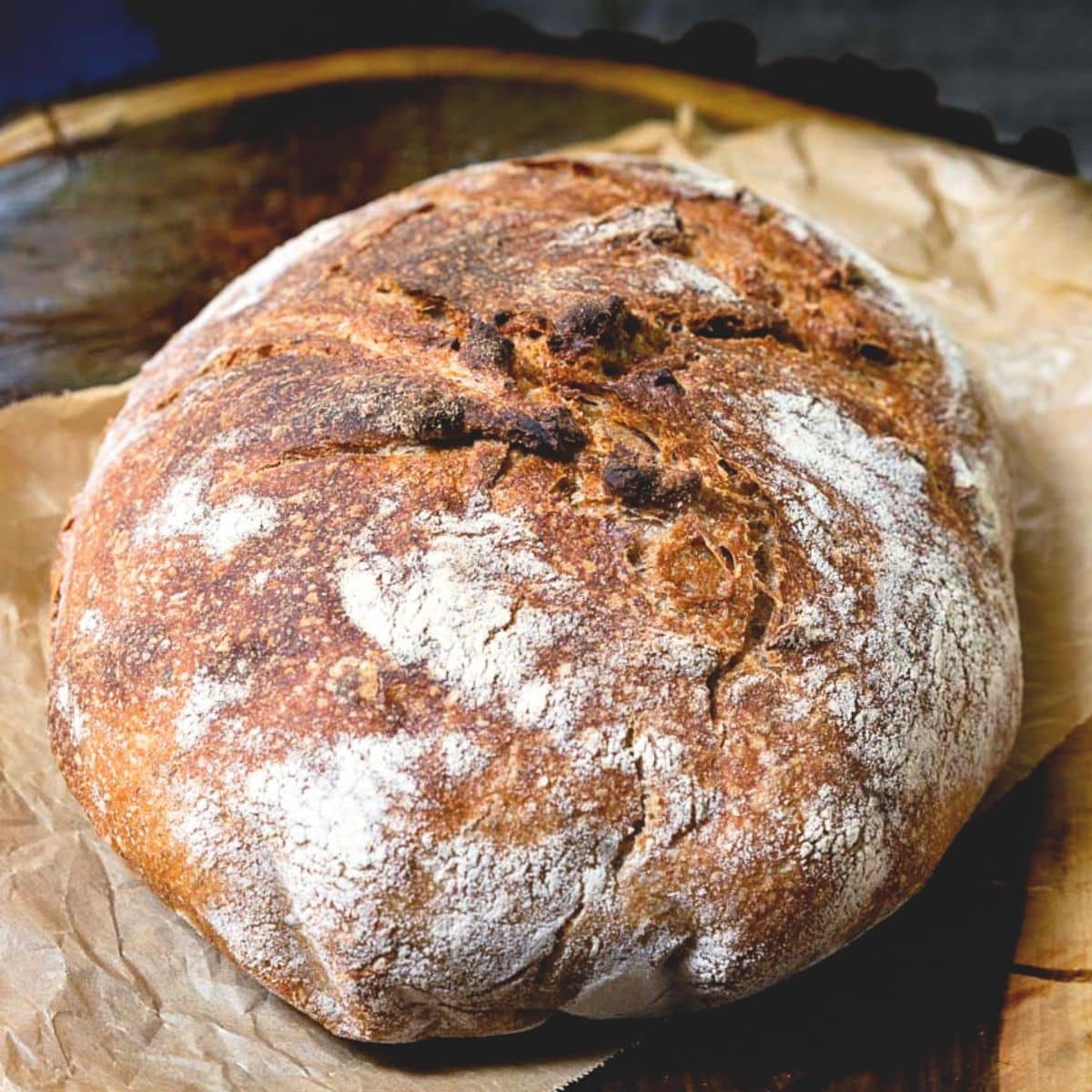
Unlike my other sourdough bread recipes, I didn’t score this loaf prior to baking. Since Spelt doesn’t contain the structure of other flour I didn’t feel it was necessary.
Scoring the loaf prevents a “blow out” or tear while baking. Some bakers like this effect so don’t score any of their bread.
As you can see, this Spelt Sourdough Bread didn’t blow out. It didn’t bake as tall as our other sourdough bread recipes but that was expected.
If you dislike throwing away sourdough starter discard, you’re going to love these Sourdough Starter Discard recipes!
I hope you enjoyed this delicious recipe as much as we do. Drop me a comment below, and don’t forget to give it a star rating. ⭐⭐⭐⭐⭐. Your comments and ratings help others decide if this recipe is for them too.
Spelt Sourdough Bread with Rosemary
Ingredients
- 150 grams bubbly starter
- 385 grams *purified water or filtered water at room temperature
- 200 grams bread flour organic
- 300 grams spelt flour
- 9 grams sea salt fine
- 1/4 cup rosemary fresh, chopped
Instructions
- Squelch all of the ingredients together briefly (just for a minute is enough) with your hand. Cover the bowl with plastic wrap and let the dough rest for 30 minutes. Don't skip this step!
- Stretch and fold the dough into the bowl several times for about a minute. I just pull the outside to the center as I turn the bowl. Place the dough into a large bowl or clear container and let it rise until doubled, approximately 6 hours.
- Dust your counter with flour. Scrape the dough out onto the counter. Don't punch it down. You want to keep as many of those bubbles as you can.
- Pull the outside thirds into the middle and shape as you wish. Try to pull the outside of the dough as tightly as possible so it will hold its shape well. I shaped mine into a ball also known as a boule. Place the dough into a prepared bowl or banneton seam-side up.
- Cover and put the shaped dough in the refrigerator overnight.
- When ready to bake, remove the dough from the refrigerator while the oven preheats.
- Preheat the oven to I preheat to 475 °F and place my lidded pot inside to heat up. You can use an enamel dutch oven or aluminum roaster. You can also put the dough into a cold pot but I find I don't get the same golden color when I do that.
- Carefully remove the pot from the oven and remove the lid. Carefully place the dough into the pot. I lift mine by the edges of the *parchment paper and put the whole thing into the pot. Replace the lid and place in the oven.
- Reduce the heat to 425 °F convection. Bake for 20 minutes. Remove the lid and bake for an additional 20 to 25 minutes.
- Immediately remove the bread from the pot and place it on a cooling rack. Let it cool completely before slicing. Warm bread is more difficult to slice but, sometimes you just got to have that slice of warm bread!
Video

Notes
- If you need assistance getting your shaped dough into a hot pot, I’ve deveoped a technique that may help. You can see the video here.
- Your bread can be cooked in a cold dutch oven but I like the color and rise I get from preheating my lidded pot.
- This bread freezes beautifully. I wrap it in plastic wrap or a ziplock bag and then heavy-duty foil.
Nutrition
Nutritional Disclaimer
This recipe was calculated using the exact brands and measurements I used to make this recipe. If you are following a strict diet please note changing anything will cause the nutritional info to change. My calculations are intended as a guide only.
I want to thank the reader who suggested that we make a spelt bread recipe. I loved it and hope you will too!
More Sourdough Bread Recipes to Try
- Overnight Sourdough Bread
- No-Knead Sourdough Bread with All-Purpose Flour
- Sourdough Sandwich Bread
- Sourdough Rye Bread
- Sourdough Pumpernickel Bread
- Sourdough Focaccia
- Multigrain Wheat Sourdough Bread
- Complete Sourdough Baking Guide
Did you enjoy this recipe? Don’t forget to pin it for later and follow me on Pinterest for more delicious recipes like this one!
Originally published: March 13, 2020. Updated on March 28, 2026– Enhanced with more detailed instructions, tips, and serving suggestions. No changes were made to the recipe.




Omg, so excited! My first attempt ever making sourdough and I did not have much faith. I used a starter that was given to me probably 10 months ago. Started feeding it last week, and decided I just have to go for it. I only had spelt flour and a bit of little white flour; I was thrilled to come across your recipe. I haven’t tasted it yet but thrilled it looks great! Thank you so much for sharing your recipe and videos.
Jennifer, that just warms my heart! Thank you so much for giving it a try and so glad that it worked for you!
Hi! In your written recipe you have bench ferment for 6 hours, then shape and into bowl/banneton and overnight in the fridge. Short bench rest in morning whilst oven pre-heats and then bake.
In your video you have the bench rest & overnight rest (you don’t specify time or location), and then shape with a short bench rest in the morning prior to baking.
Is it better to shape prior to overnight rest or in the morning just prior to baking? Or do both?
Great question, Nicole. Most of the time I shape it and let it sit out and then refrigerate it overnight. It will maintain it’s shape.
Can you use sprouted spelt flour?
I’ve never used sprouted spelt flour but as long as it’s the consistency of spelt flour I wouldn’t know why not. If you try it, Mariana, will you let me know how it goes so I can share your experience?
Excellent spelt recipe! My only change was that I did a couple stretch and folds during the 6 hour rising time. Crust was nice and golden and inside had a great texture. Thanks for sharing this!
I love spelt, Sydney, and so glad you enjoyed it. I often do 3 to 4 stretch and folds the first 3 hours for that open crumb that we enjoy. Thank you so much for your comment!
Is this a one time use? Mine was nice and bubbly but I wasn’t able to use it at that time so I discarded and fed it with a 50/50 ratio. Now it is a little bubbly but quite runny. It sinks when I put it in water.I don’t dare to use it. Should I throw this away and start again,hoping I am able to use it? I also grind my own spelt berries on demand. Would that make a difference? Thank you. I am excited to try this recipe!!
Great question, Teashie! You need to keep feeding it or refrigerate it between baking. See my post on starters, https://hostessatheart.com/sourdough-discard-recipes/. You’ll remove all but about 1 tablespoon and then refeed it. You don’t need to keep that much starter in between baking. I hope this helps. If not, just let me know.
Worked beautifully and the rosemary flavor is perfect.
I made two loaves at the same time and the amount of rosemary on the cutting board looked as though I trimmed a Christmas tree, but the taste was perfect. Will add roasted garlic next time.
Awesome and easy recipe!
Thanks for creating/sharing.
Thank you, LL! I appreciate your comment. The roasted garlic will be amazing!
I just made a 100% spelt flour bread. It is extremely tasty, took a little longer to cook maybe? Thanks for the recipe and instructions.
I’m so glad that it worked for you, Charlotte! Thank you for sharing your experience and the outcome!